Oil edges higher as Iran claims Hormuz mine strikes no one has verified
Iran's Revolutionary Guards say their mines hit tankers near the Strait of Hormuz. Nobody has independently confirmed it, but documented attacks on shipping and threats to Saudi oil sites have traders wary of supply risk.
By James Mitchell · · Updated
For information only, not investment advice.
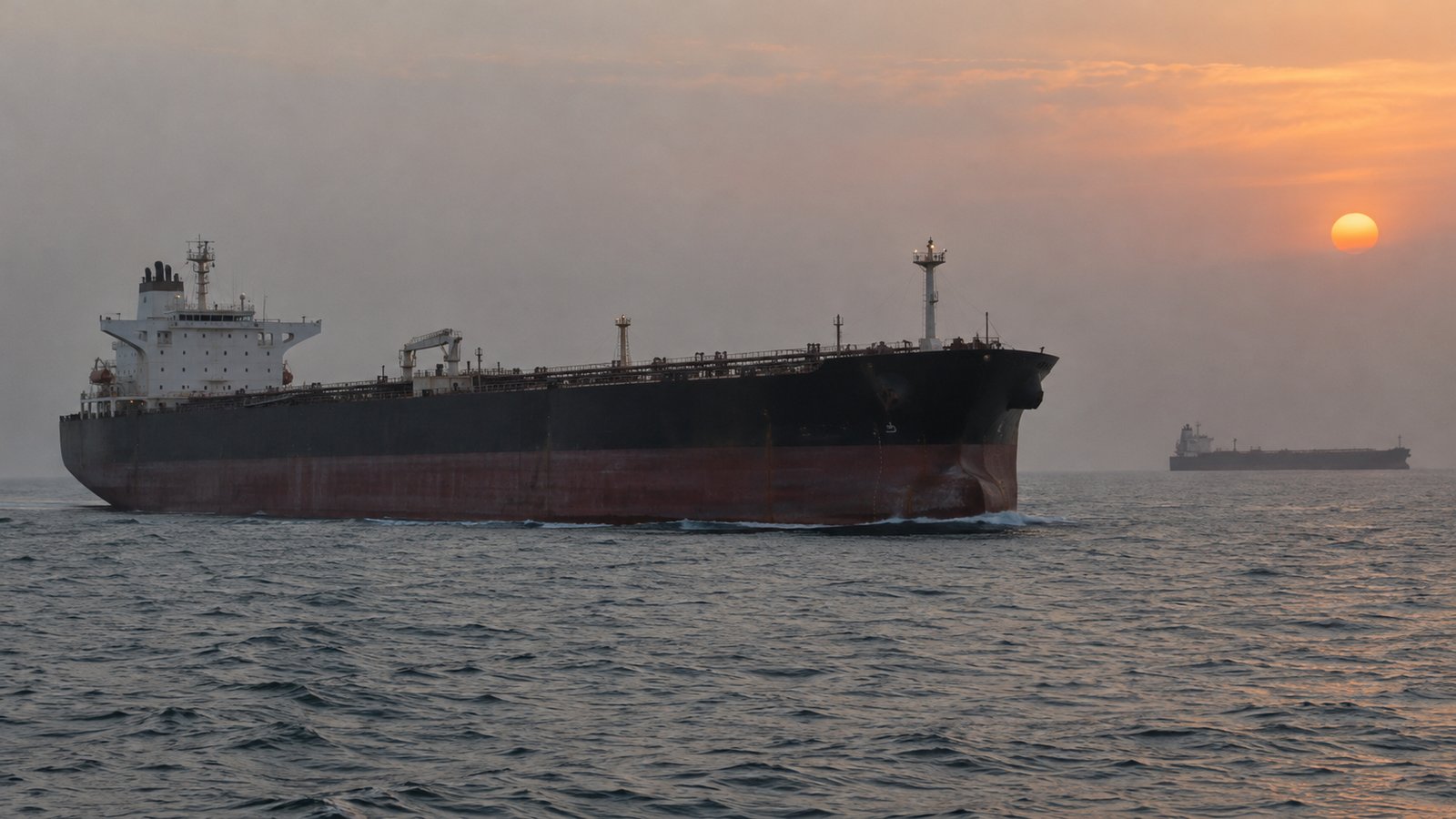
Oil prices edged higher in early Asian trading on Wednesday, for the oldest reason in the region: worry about what might not get through. Reuters, in a report carried by CNBC, said prices rose "on Middle East supply concerns, with traders wary of Red Sea shipping risks and threats to oil infrastructure in Saudi Arabia."
What is actually confirmed about those attacks is thinner than the headlines suggest. The latest claims come from Iran's Revolutionary Guards. The Guards' navy said on Tuesday that a supertanker caught fire after striking a sea mine south of the Strait of Hormuz while "violating" Iranian regulations, according to Iranian media cited by Reuters. Separately, AFP, via The Hindu, reported that the Guards said in a statement on their Sepah News website that their mines had set ablaze and halted two "violating" tankers at what Tehran calls an illegal crossing point in the southern part of the strait.
Claimed, not confirmed
No independent source has verified the claims so far. Maritime outlet gCaptain noted that "Neither statement identified the vessels or provided independently verifiable evidence of the reported strikes" and that the Guards did not say when the tankers were allegedly hit, leaving open whether the announcements describe new incidents or repeat earlier ones.
There is a pattern here. The Guards made similar mine claims on each of the two previous days, AFP reported. That makes three straight days of announcements, and Tuesday's statements named no ships. When the Guards claimed on Oct. 17 that two supertankers had struck mines in the strait, the multinational Joint Maritime Information Center said in an advisory, as quoted by gCaptain, that "there is no substantiation to these claims". Shipping insurer Steamship Mutual, in an Oct. 20 update, said reports of possible naval mine incidents "remain uncorroborated and should be treated with caution pending independent verification."
What is documented
Attacks on shipping more broadly are better documented. Ship tracker Kpler said in a note on Monday that at least 18 vessel attacks had been reported over two weeks, Reuters reported. LSEG analysts said in a note that "Attacks on tankers have expanded beyond the Strait of Hormuz," adding that Iran has been targeting vessels as far south as the Gulf of Oman, "threatening loadings outside of the Arab Gulf, as well as the ship-to-ship transfers that have helped to support Middle East loadings as the conflict has dragged on."
AFP reported that attacks on vessels trying to cross the waterway have increased in recent days, as Washington seeks to escort more ships through the strait while Tehran seeks to maintain control over passage. And the Gulf is not the only pressure point: Yemen's Houthis on Monday claimed responsibility for attacks on a Saudi Aramco site in Yanbu, the Shaybah oilfield and Saudi Arabia's Riyadh and Abha airports, according to Reuters.
For the longer view, the International Maritime Organization counts 116 confirmed incidents and 24 confirmed seafarer fatalities in the Strait of Hormuz and the wider Middle East as of Oct. 20. Those are running totals for the conflict as a whole, not this week's events, and Kpler's count uses a different method and period, so the two shouldn't be added together.
What it means for your money
In peacetime, AFP noted, Hormuz carried around a fifth of the world's oil supplies. That scale is why the strait matters to anyone who buys fuel or holds energy exposure. It's also why claims about it deserve a careful read before anyone treats them as fact.
The things worth watching are concrete. Do independent monitors such as the JMIC, or shipping insurers, confirm any of Tuesday's claims? Are vessels named? Do the attacks LSEG described keep reaching loadings outside the Gulf? Until those answers come in, the accurate word for Tuesday's reported mine strikes is the one Iran's own statements support: claimed.
Sources
- Oil rises on Middle East supply worries, CNBC (Reuters)
- Iran Guards say their mines halted two tankers crossing Strait of Hormuz, The Hindu (AFP)
- Iran claims more tankers hit mines in Hormuz but evidence remains elusive, gCaptain
- Middle East: highlighted incidents, International Maritime Organization (IMO)
- Situation: Iran and Middle East region, Steamship Mutual
Tags: energy · markets-moves